 ModelFold
gpt-5-6-sol
GPT-5.6 unites Sol, Terra, and Luna in a three-tier family built for frontier intelligence, efficient everyday work, and fast high-volume execution across technical and professional tasks.
Pricing: Input 350 credits / 1M tokens (≈ $1.75), Output 2100 credits / 1M tokens (≈ $10.50).
How can I help you today?
Explore more Chat models
More AI models from OpenAI
Latest and popular AI models
Scale Ambitious AI Products with GPT-5.6 API on ModelFold
Choose GPT-5.6 Sol, Terra, or Luna on ModelFold to match frontier capability, balanced performance, or cost-efficient speed to every AI application.
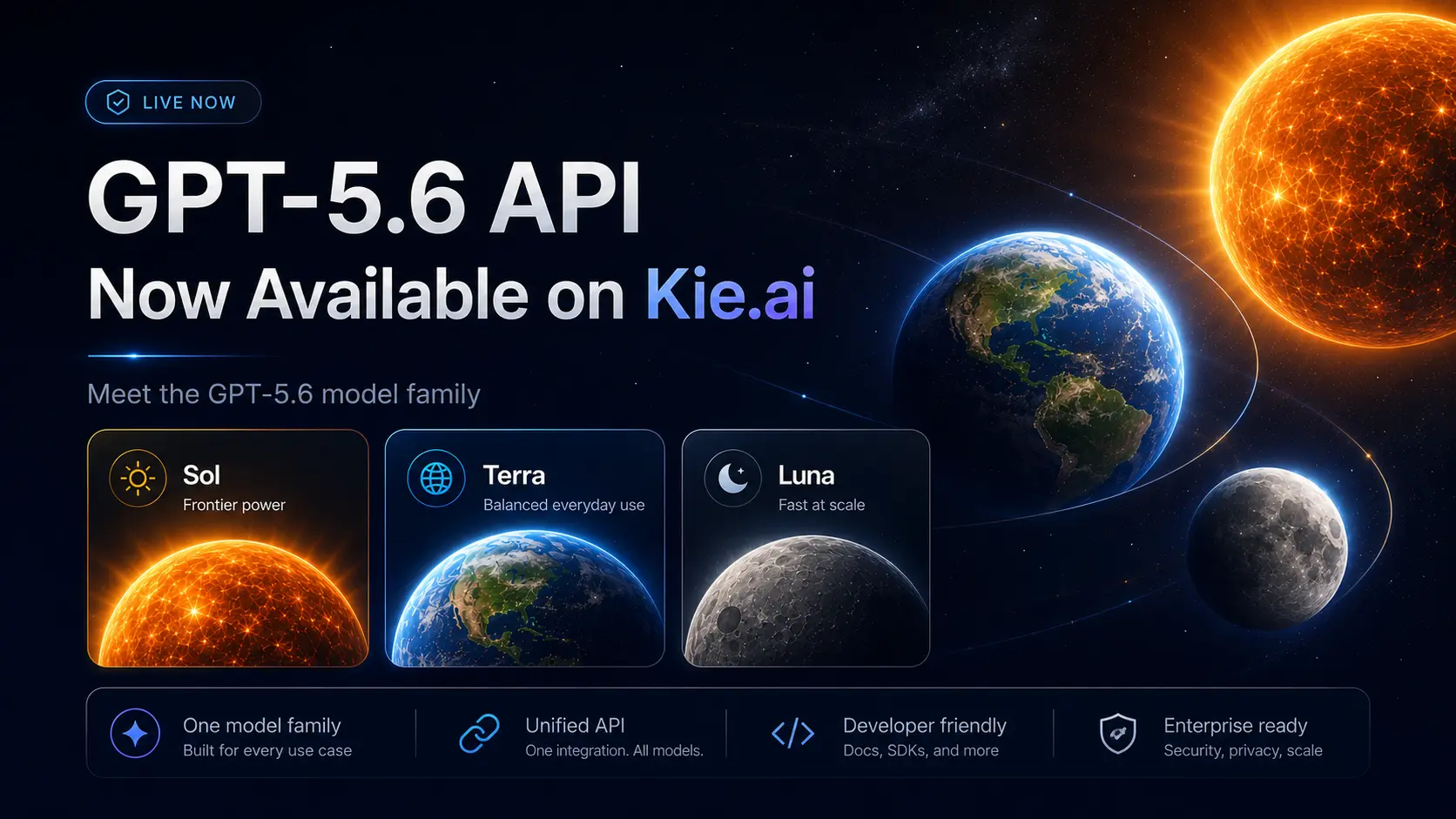
Meet GPT-5.6 Sol, Terra, and Luna—Built for Every AI Ambition
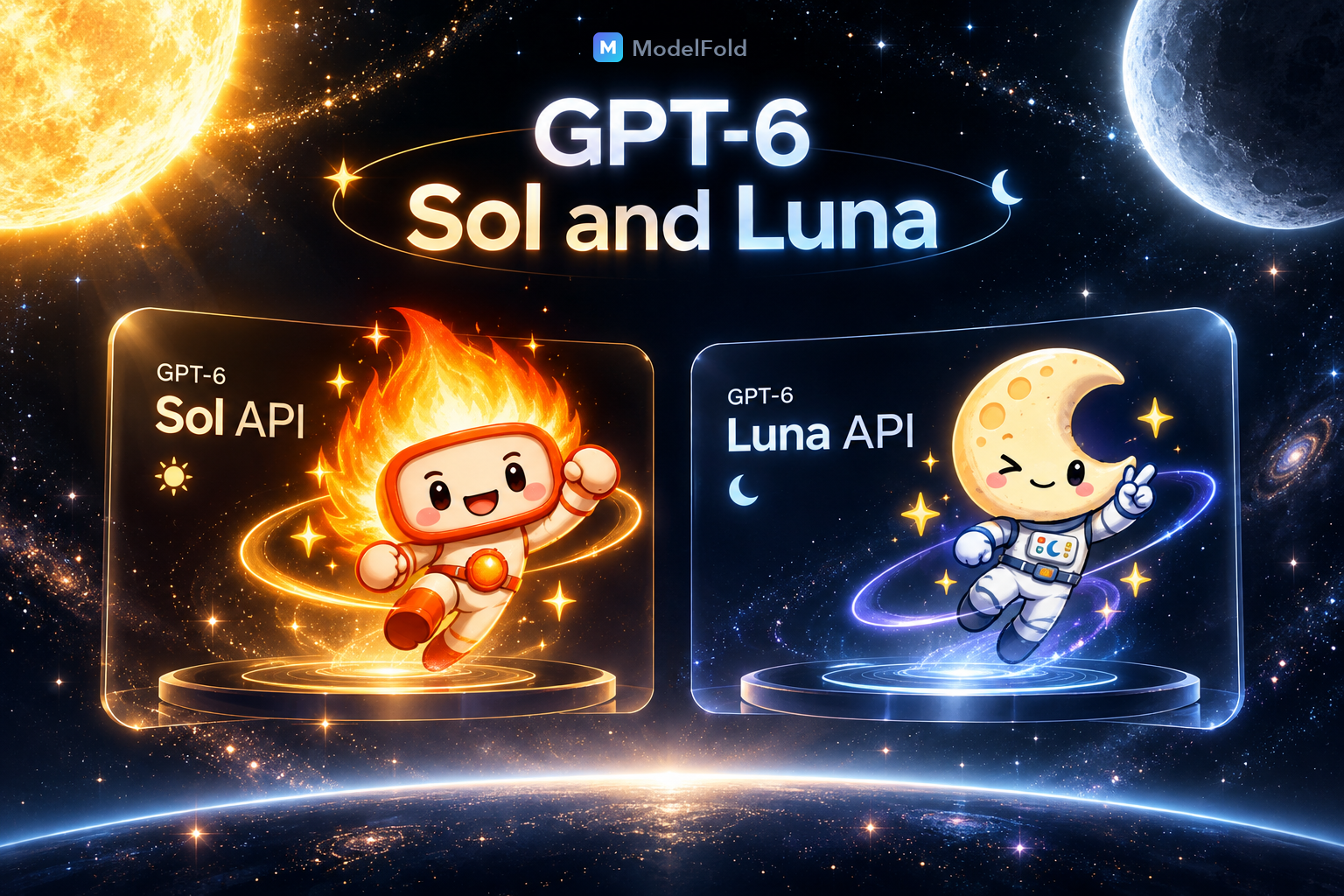
Released on July 9, 2026, GPT-5.6 is OpenAI’s three-tier model family created to support different levels of intelligence, efficiency, speed, and scale. Sol brings frontier capability to the most demanding assignments, Terra balances strong performance with practical everyday efficiency, and Luna delivers fast, affordable execution for high-volume applications. ModelFold provides access to the complete family through GPT-5.6 Sol API, GPT-5.6 Terra API, and GPT-5.6 Luna API. If you are comparing the three GPT-5.6 options for complex tasks, consider GPT-6 Astra API when you prefer a single model choice without tier-by-tier selection.
GPT-5.6 Sol API for Frontier Intelligence
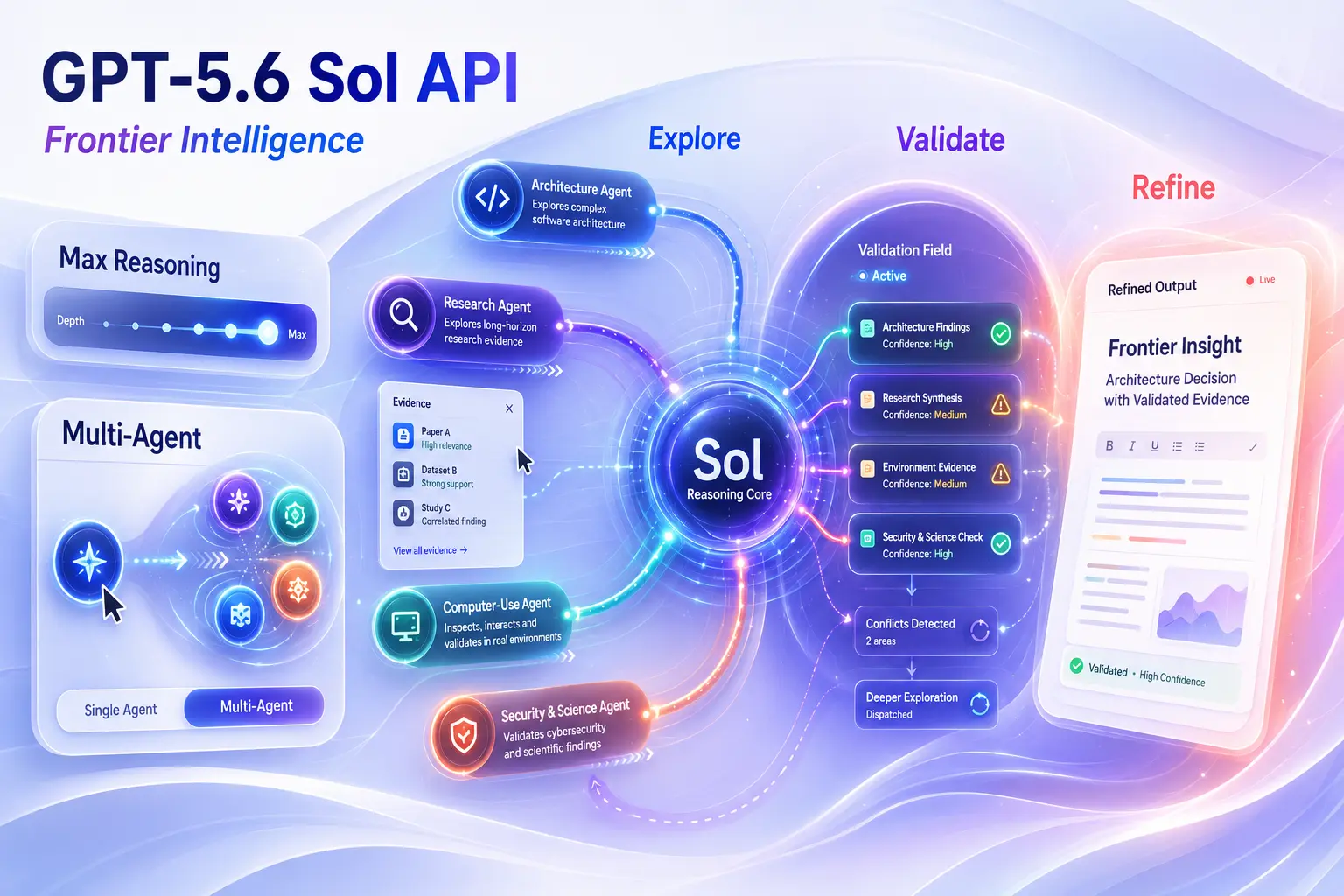
GPT-5.6 Sol API is the flagship tier for complex work that demands advanced reasoning, coding, tool use, and careful result refinement. Its capabilities extend across software engineering, long-horizon research, professional knowledge work, computer use, cybersecurity, scientific analysis, and polished artifact creation. Max reasoning and multi-agent execution provide additional capacity for assignments that require deeper exploration, parallel processing, and rigorous validation.
GPT-5.6 Terra API for Balanced Everyday Performance
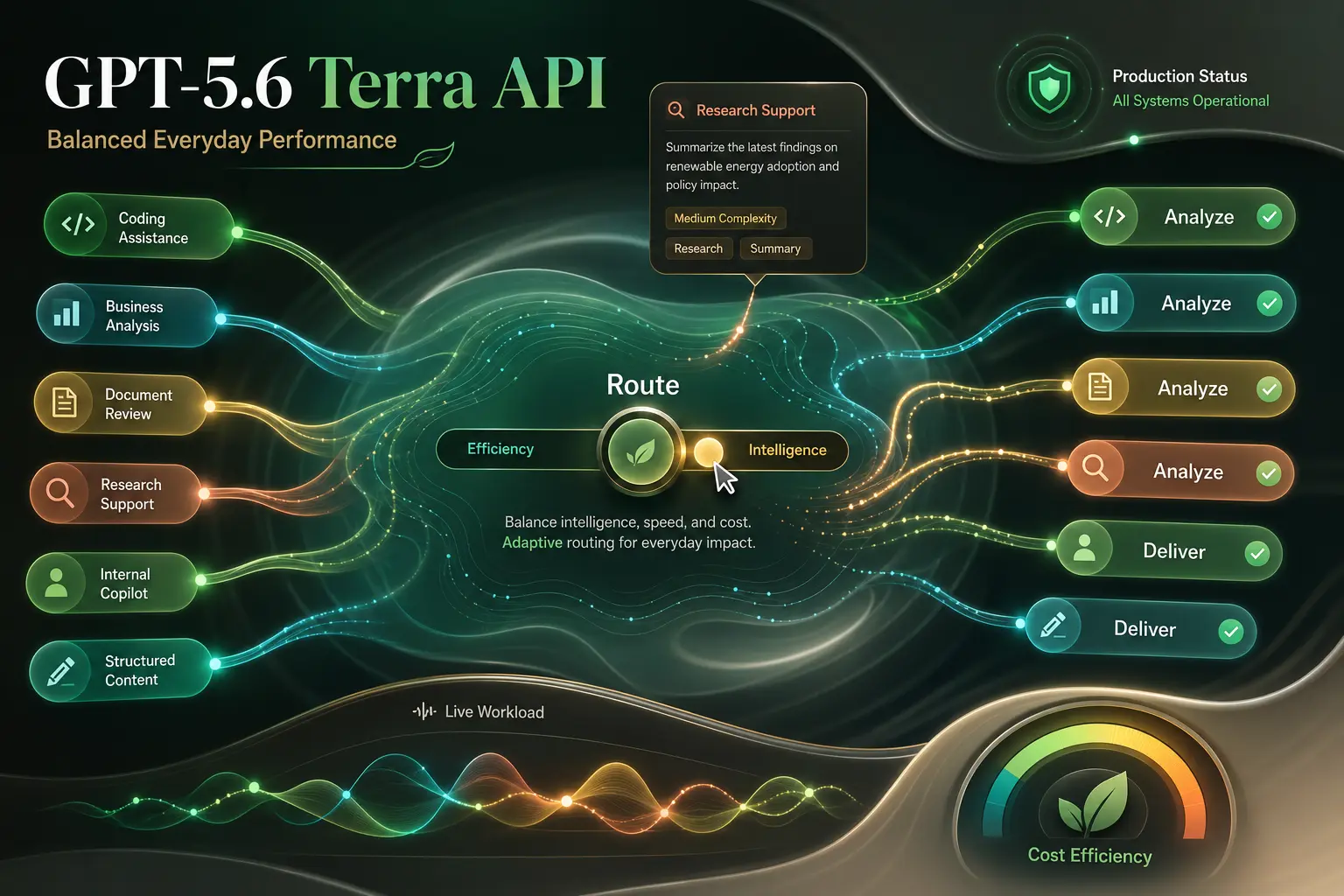
GPT-5.6 Terra API combines strong intelligence with greater cost efficiency for regular production use. It is well suited to coding assistance, business analysis, document review, research support, internal copilots, structured content generation, and other frequently used AI features that need dependable performance without relying on the flagship tier for every request.
GPT-5.6 Luna API for Fast and Affordable Scale
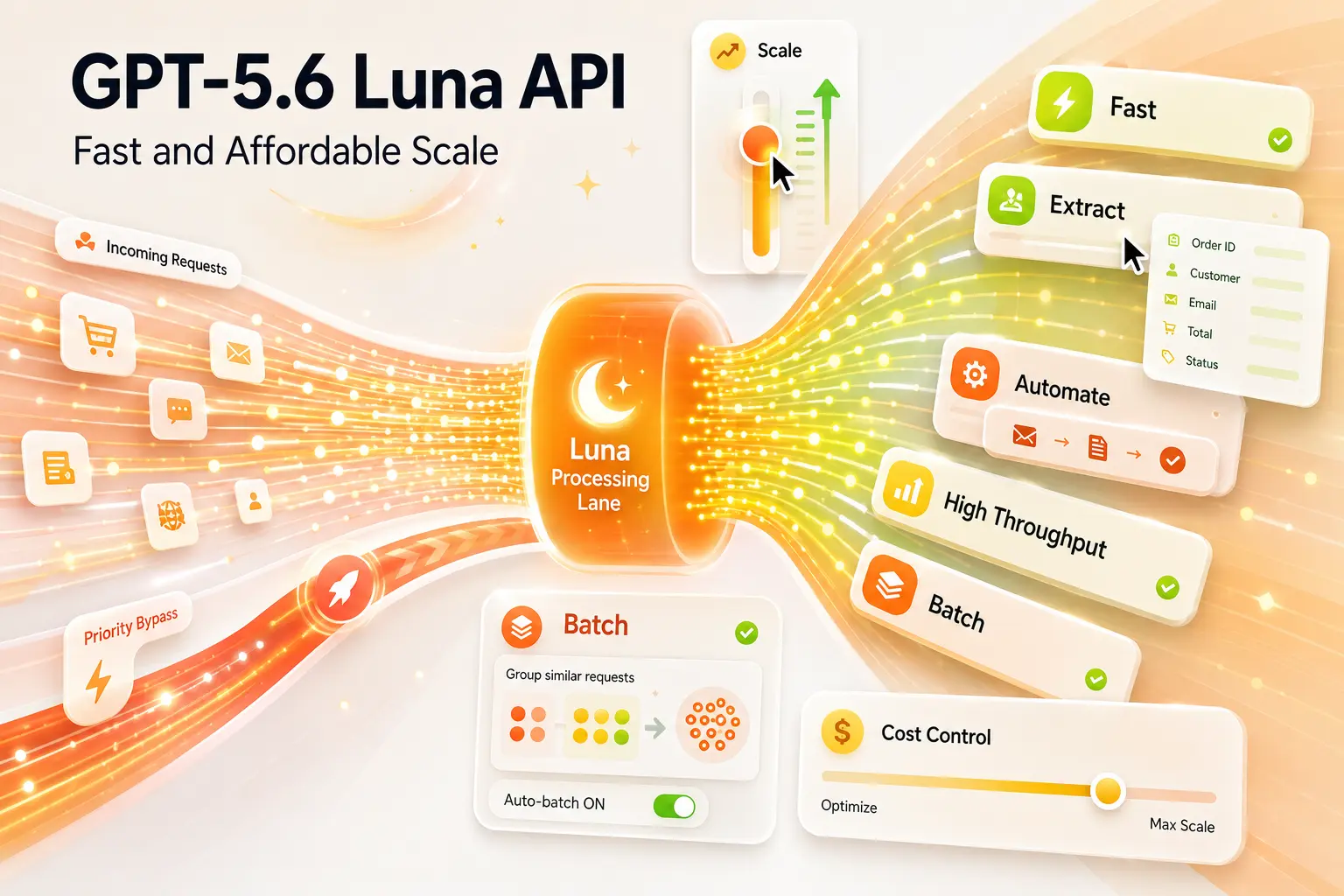
GPT-5.6 Luna API is the fastest and most affordable tier in the family, providing an efficient foundation for applications with frequent requests or large user volumes. It fits responsive assistants, information extraction, classification, content processing, lightweight automation, and other scalable features where latency, throughput, and cost control are essential.
What Gives the GPT-5.6 API Its Frontier Advantage
GPT-5.6 API Delivers Efficient Reasoning with Max and Ultra
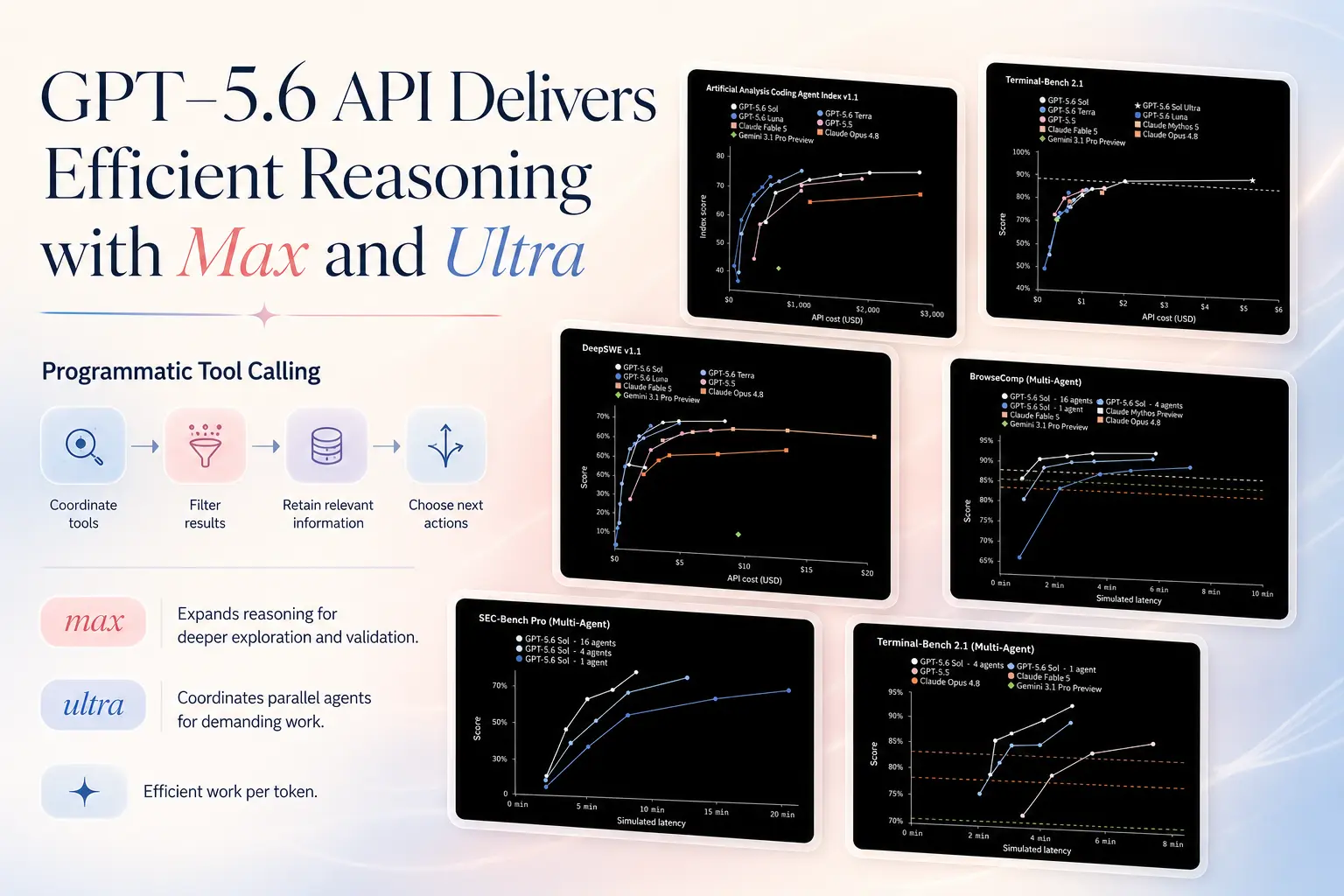
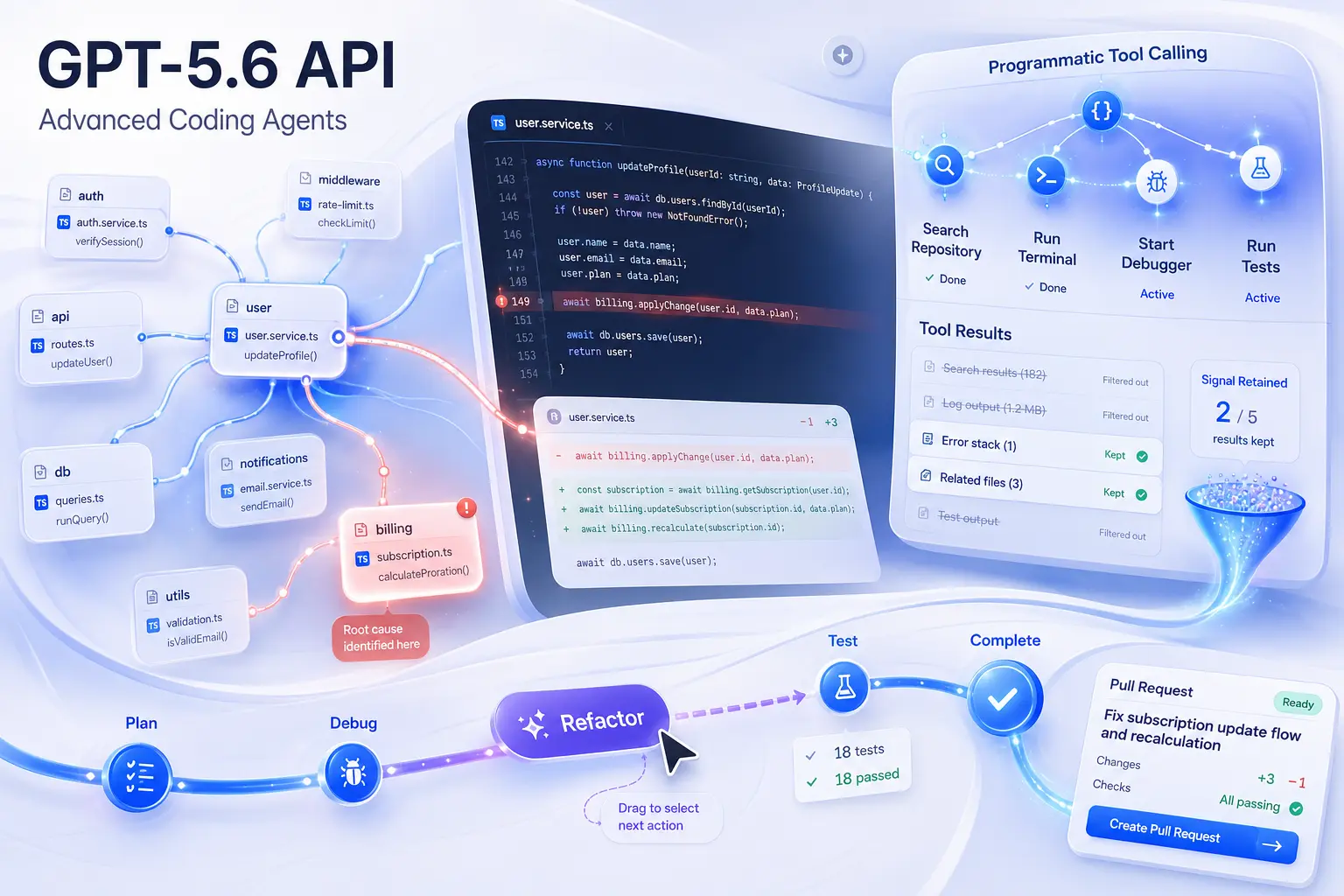
Designed to produce more useful work from every token, GPT-5.6 API reduces unnecessary output, model round trips, and intermediate processing across complex tasks. Programmatic Tool Calling enables lightweight in-memory programs to coordinate tools, filter large results, retain relevant information, and determine the next action as work progresses. The max setting expands the reasoning budget for deeper exploration and validation, while ultra coordinates parallel agents to reach stronger results faster on demanding requests. Check the latest ModelFold API documentation for supported reasoning levels, tool-calling options, and request parameters.
OpenAI GPT-5.6 API Adds Stronger Design Judgment and Computer Use
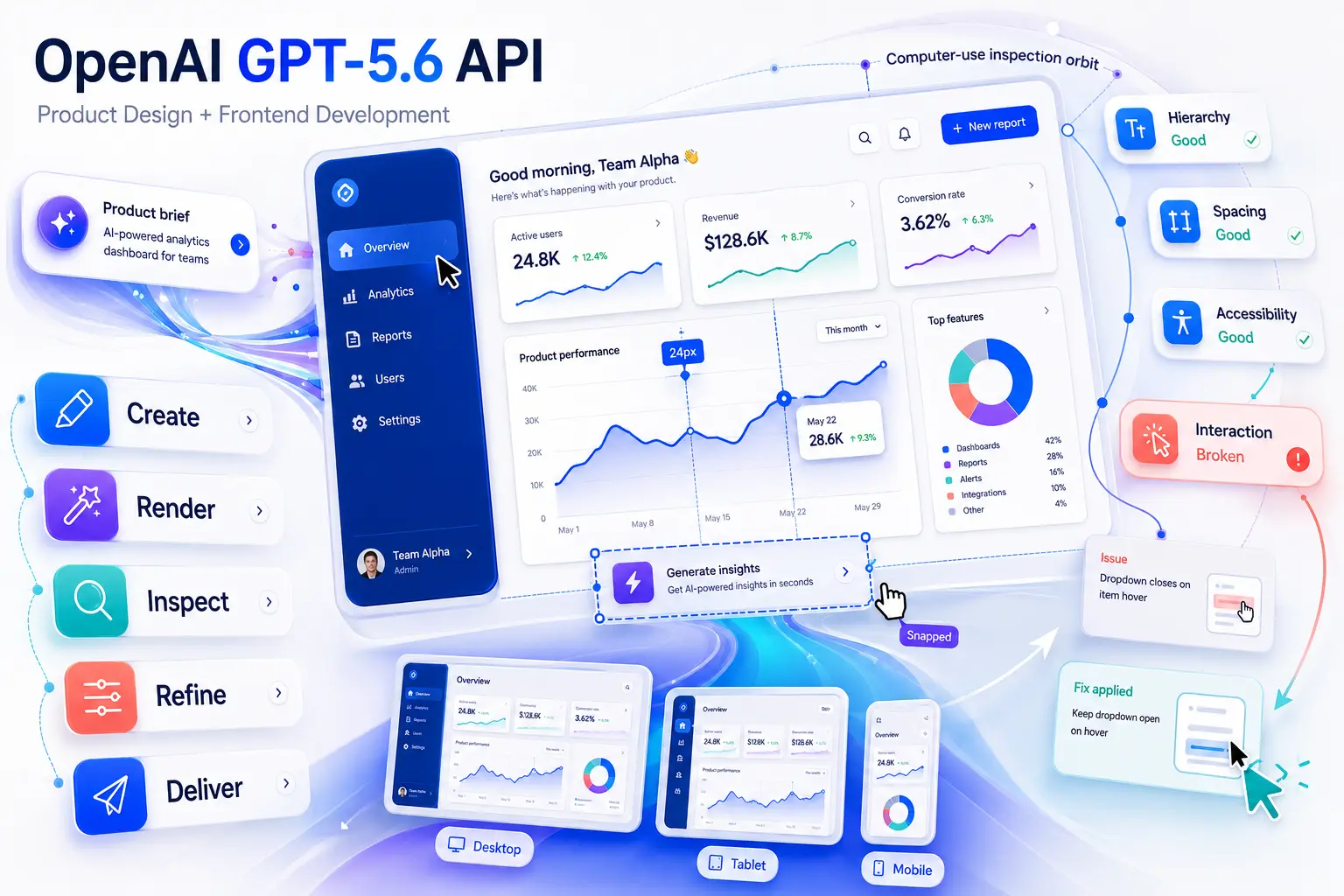
Beyond generating code or content, OpenAI GPT-5.6 API can inspect the rendered result and evaluate how the final experience actually looks and behaves. Improved computer-use capability helps identify weak hierarchy, inconsistent spacing, confusing navigation, broken interactions, and unfinished visual details. This additional inspection and refinement loop produces interfaces, visualizations, and interactive outputs that feel more coherent, functional, and production-ready.
ChatGPT-5.6 API Improves End-to-End Knowledge Work and Artifacts
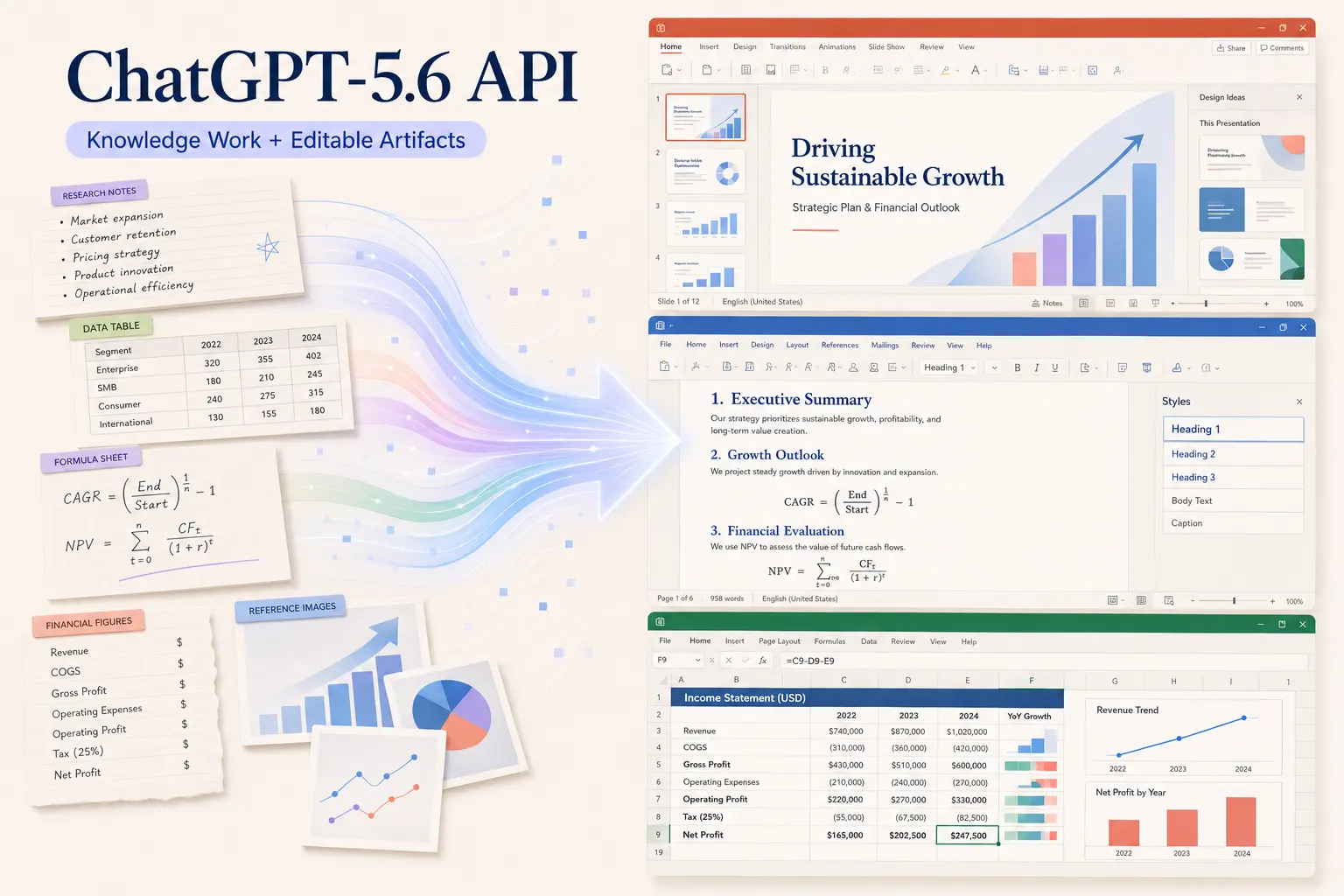
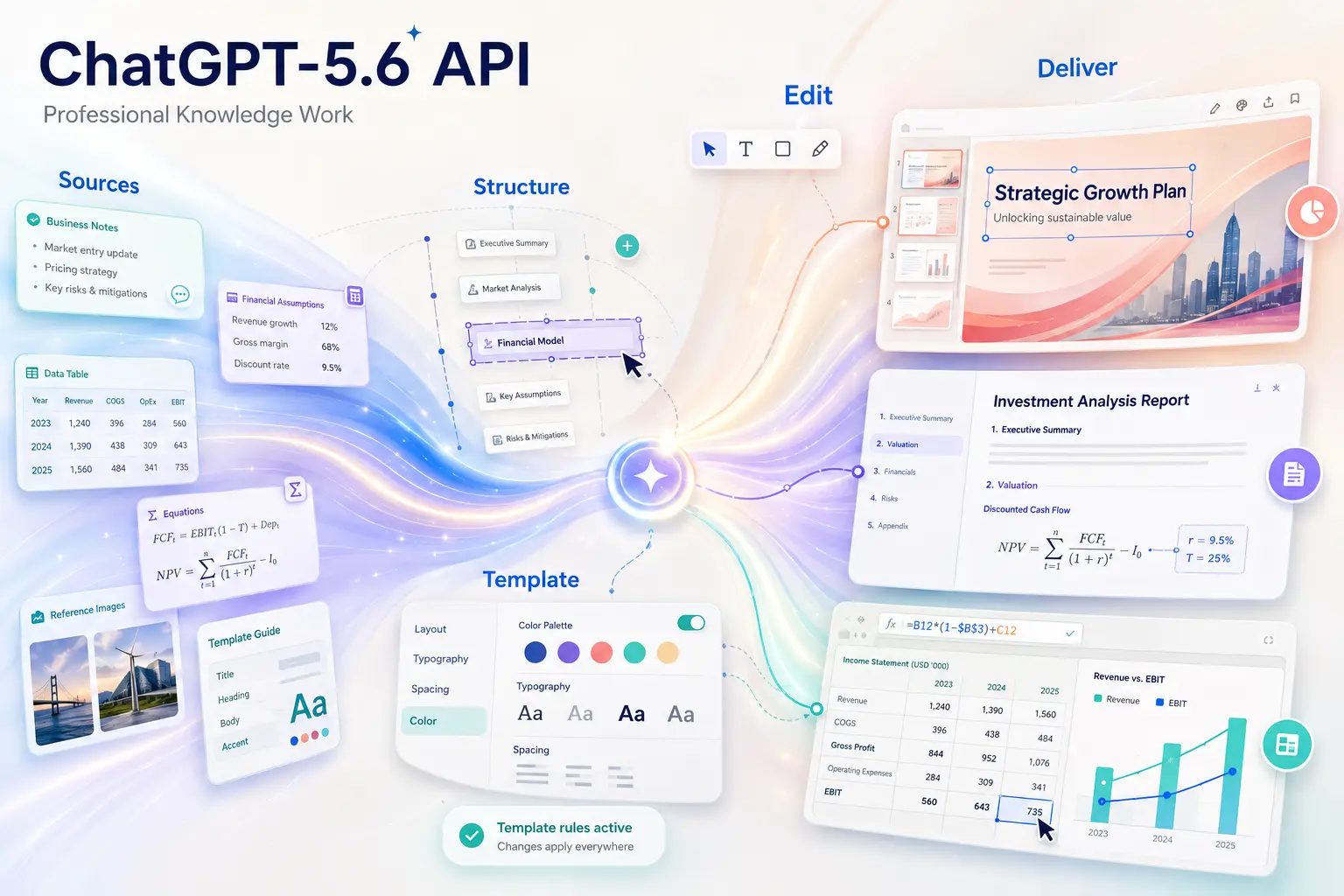
For professional output, ChatGPT-5.6 API strengthens the complete path from fragmented source material to an editable final deliverable. Presentations gain clearer narrative structure and more consistent layouts, while documents and spreadsheets benefit from stronger typography, equations, financial logic, formatting, and information hierarchy. Better template understanding also allows ChatGPT-5.6 API to preserve recurring layouts, spacing systems, colors, master-slide rules, and reference-file conventions more accurately.
GPT-5.6 Sol API Advances Cybersecurity, Science, and AI Research
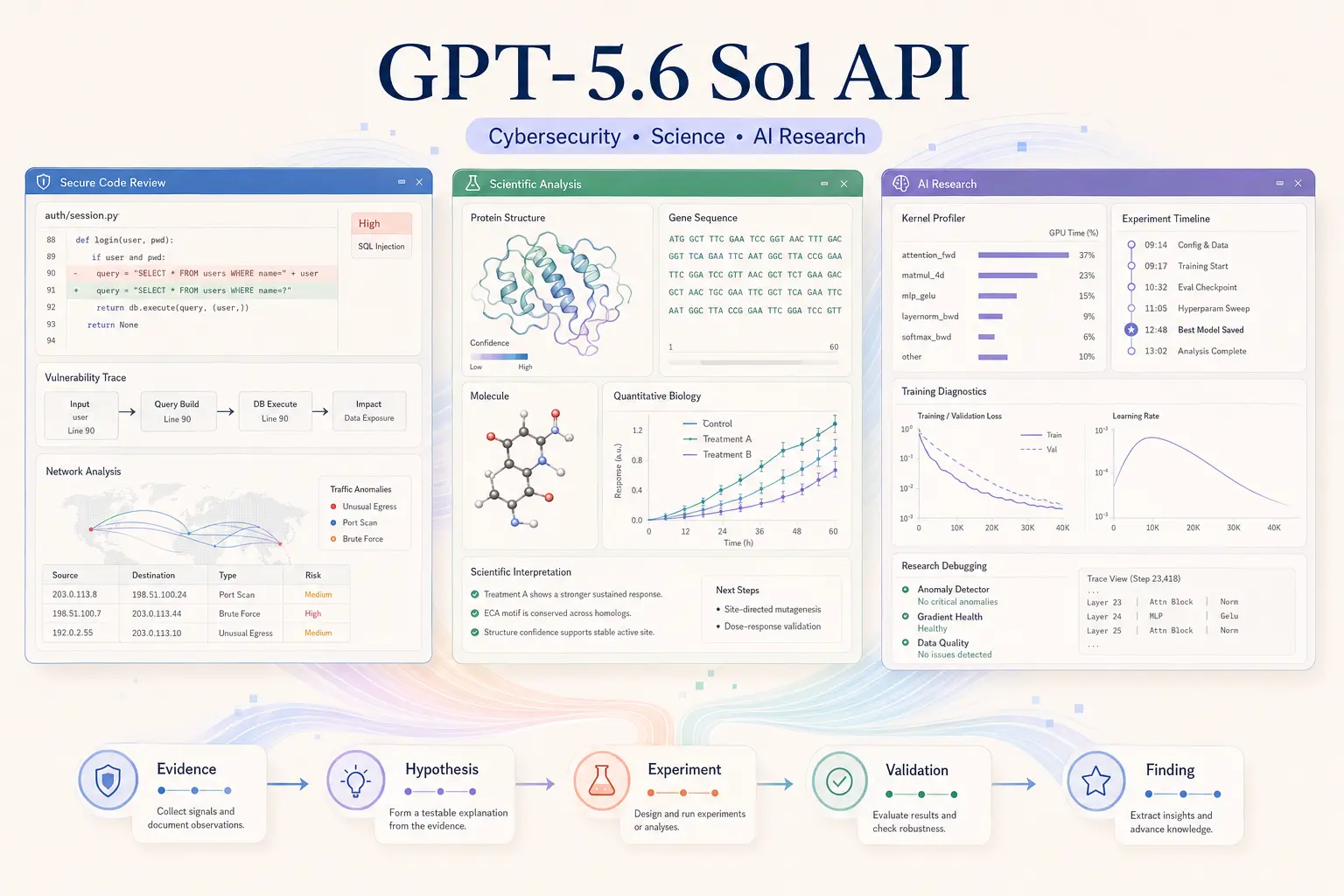
At the frontier tier, GPT-5.6 Sol API delivers major capability gains across cybersecurity, life sciences, chemistry, quantitative biology, and internal AI research. Stronger long-horizon reasoning improves vulnerability analysis, secure code evaluation, scientific interpretation, research debugging, kernel optimization, experiment execution, and training-system analysis. These gains are supported by higher benchmark performance across ExploitBench, GeneBench Pro, LifeSciBench, and OpenAI’s internal research evaluations.
OpenAI API Scales Safety and Security with GPT-5.6 Capability
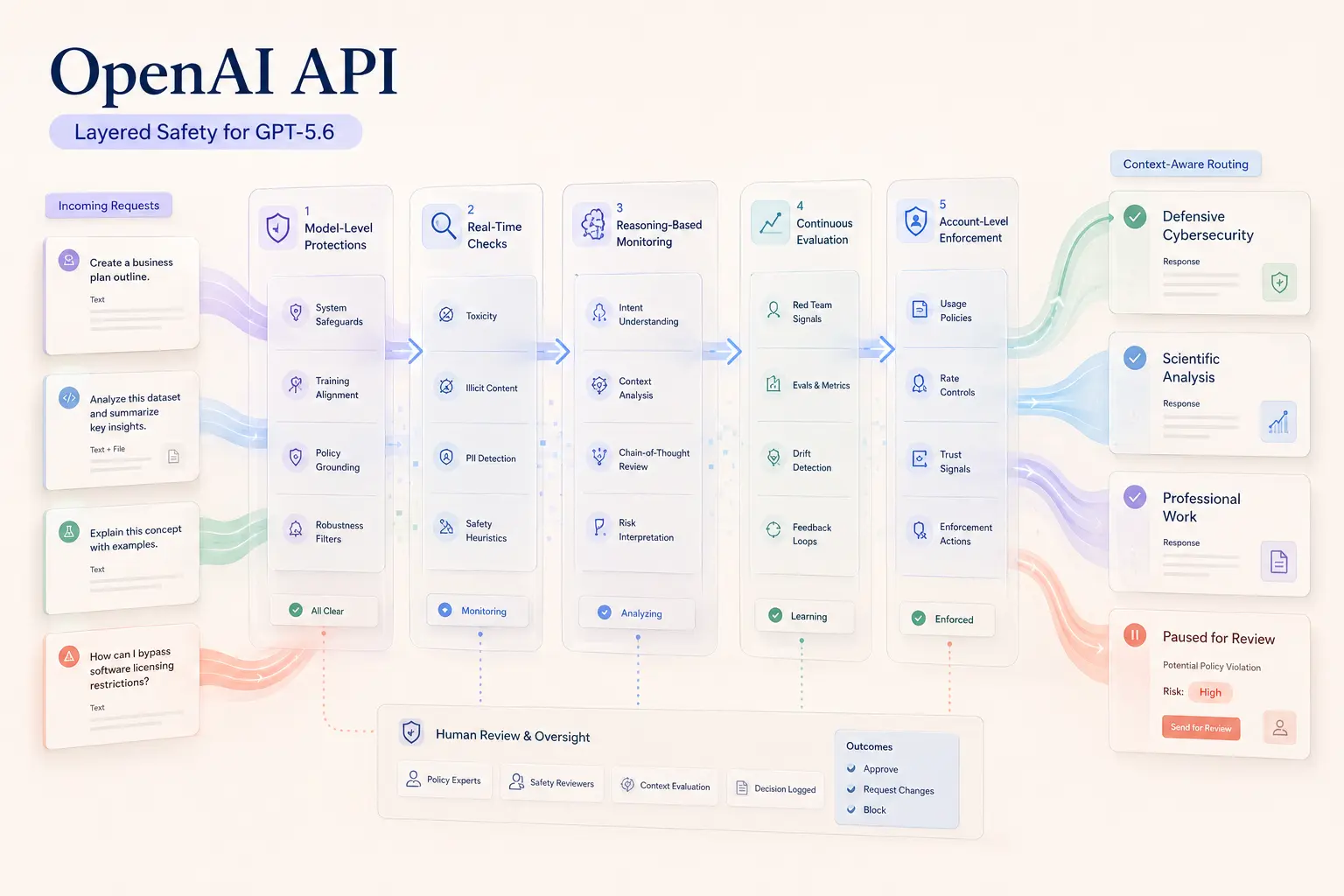
As capability increases, the OpenAI API applies a layered safeguard system calibrated to the strengths and risks of each GPT-5.6 tier. Protections trained into the models operate alongside real-time checks, reasoning-based monitoring, continuous evaluation, and account-level enforcement. Sensitive capabilities can receive stricter access controls, while legitimate defensive, scientific, and professional work remains available under safeguards designed to consider context rather than relying only on basic classifier flags.
One GPT-5.6 Family, Three Levels of Intelligence and Efficiency
GPT-5.6 Sol, Terra, and Luna are designed for different balances of capability, speed, and operating cost. Sol leads the family on complex reasoning, coding, computer use, cybersecurity, and scientific work; Terra preserves strong performance at a lower cost; and Luna provides the fastest, most affordable option for frequent workloads. The benchmark results and prices below come from OpenAI’s general-availability release. Listed prices are OpenAI’s rates rather than ModelFold pricing, and actual performance, latency, and token consumption may vary by reasoning level, tool use, prompt design, and task complexity.
| Comparison Area | GPT-5.6 Sol | GPT-5.6 Terra | GPT-5.6 Luna |
|---|---|---|---|
| Official Positioning | Flagship frontier model | Balanced lower-cost model for everyday work | Fastest and most affordable model |
| Capability Direction | Maximum intelligence and efficiency | Strong performance with practical cost efficiency | Fast execution for high-volume workloads |
| Core Strengths | Advanced coding, knowledge work, computer use, cybersecurity, science, and complex reasoning | Everyday coding, analysis, professional work, and balanced production tasks | Frequent requests, scalable processing, and cost-sensitive workloads |
| Agents’ Last Exam | 52.70% | 50.40% | 50.30% |
| Artificial Analysis Coding Agent Index v1.1 | 80 | 77.4 | 74.6 |
| SWE-Bench Pro | 64.60% | 63.40% | 62.70% |
| Terminal-Bench 2.1 | 88.80% | 87.40% | 84.70% |
| BrowseComp | 90.40% | 87.50% | 83.30% |
| OSWorld 2.0 | 62.60% | 50.20% | 45.60% |
| SEC-Bench Pro | 71.20% | 57.70% | 48.90% |
| GeneBench Pro | 28.70% | 23.30% | 10.80% |
| MRCR v2, 256K–512K | 91.50% | 89.60% | 41.30% |
| OpenAI Official Input Price | $5 per 1M tokens | $2.50 per 1M tokens | $1 per 1M tokens |
| OpenAI Official Output Price | $30 per 1M tokens | $15 per 1M tokens | $6 per 1M tokens |
How GPT-5.6 Sol Compares with Leading Frontier Models
GPT-5.6 Sol competes across professional reasoning, agentic coding, terminal work, browsing, mathematics, and general intelligence rather than optimizing for a single evaluation category. The comparison below uses results published in OpenAI’s general-availability release. A dash indicates that no result was reported for that model in the corresponding evaluation, while real performance can vary with reasoning effort, tools, prompts, and evaluation settings. GPT-5.6 Sol leads this selection on Agents’ Last Exam, the Coding Agent Index, DeepSWE, Terminal-Bench 2.1, BrowseComp, GPQA Diamond, and FrontierMath Tier 1–3. Claude models remain ahead on certain evaluations, including SWE-Bench Pro, GDPval-AA v2, and Toolathlon, showing that model selection should account for the specific task rather than relying on one aggregate score.
| Evaluation Area | Benchmark | GPT-5.6 Sol | GPT-5.5 | Claude Mythos 5 | Claude Fable 5 | Claude Opus 4.8 | Gemini 3.1 Pro Preview |
|---|---|---|---|---|---|---|---|
| Professional Work | Agents’ Last Exam | 52.70% | 46.90% | — | 40.50% | 45.20% | 32.10% |
| Professional Work | GDPval-AA v2 | 1,747.8 Elo | 1,493.7 Elo | — | 1,759.6 Elo | 1,600.1 Elo | 962.3 Elo |
| General Intelligence | Artificial Analysis Intelligence Index v4.1 | 58.9 | 54.8 | — | 59.9 | 55.7 | 46.5 |
| Agentic Coding | Artificial Analysis Coding Agent Index v1.1 | 80 | 76.4 | — | 77.2 | 72.5 | 42.7 |
| Software Engineering | SWE-Bench Pro | 64.60% | 59.40% | 80.30% | 80.00% | 69.20% | 54.20% |
| Long-Horizon Engineering | DeepSWE v1.1 | 72.70% | 67.00% | — | 69.70% | 59.00% | 11.80% |
| Terminal Coding | Terminal-Bench 2.1 | 88.80% | 85.60% | 88.00% | 83.10% | 78.90% | 70.70% |
| Agentic Browsing | BrowseComp | 90.40% | 84.40% | 88.00% | — | 84.30% | 85.90% |
| Scientific Reasoning | GPQA Diamond | 94.60% | 93.60% | 94.10% | 92.60% | 92.00% | 94.30% |
| Advanced Mathematics | FrontierMath Tier 1–3 v2 | 89.00% | 85.30% | — | 87.00% | 80.00% | 59.60% |
| Tool Use | Toolathlon | 58.00% | 55.60% | 61.70% | 61.70% | 59.90% | 48.80% |
How to Start Building with GPT-5.6 API on ModelFold
ModelFold provides a direct path from initial model testing to production deployment. Developers can create an API key, compare Sol, Terra, and Luna, validate prompts with real inputs, and integrate the selected tier into an application. Before configuring request parameters, review the latest ModelFold documentation for supported models, reasoning levels, input formats, tools, rate limits, and response structures. For fast, high-volume text-to-image creation of everyday visual assets, see GPT Image 2.5 API on ModelFold.
- 1
Step 1: Create Your GPT-5.6 API Key
Sign in to ModelFold and generate an API key from the account dashboard. Store the key securely in a server-side environment variable rather than exposing it in browser code, public repositories, or client applications. Separate keys can also help distinguish development, testing, and production usage.
- 2
Step 2: Test OpenAI GPT-5.6 API in the Playground
Begin with representative prompts from the intended product rather than relying only on simple demonstrations. The ModelFold playground makes it easier to review response quality, reasoning behavior, output structure, latency, and token consumption before committing engineering resources to a full integration.
- 3
Step 3: Choose GPT-5.6 Sol, Terra, or Luna
Select GPT-5.6 Sol for the most demanding reasoning, coding, computer-use, and professional tasks. Terra provides a more balanced combination of capability and cost for regular production requests, while Luna prioritizes fast and affordable execution at higher volume. Testing the same evaluation set across all three tiers can reveal where additional capability produces measurable value.
- 4
Step 4: Integrate ChatGPT-5.6 API into Your Application
Connect the selected model to the application backend through POST https://ai.modelfold.online/v1/chat/completions, and configure the instructions, inputs and error-handling logic required by the product. Keep the model identifier configurable (gpt-5-6-sol, gpt-5-6-terra, gpt-5-6-luna) so requests can move between Sol, Terra, and Luna without rebuilding the broader integration.
- ✓
Step 5: Evaluate and Deploy the OpenAI API Integration
Before production release, measure output accuracy, response consistency, latency, token use, and total request cost across realistic test cases. Route difficult requests to stronger tiers and repeatable lightweight tasks to more efficient options, then monitor production results to refine prompts, model selection, and fallback behavior over time.
Where Can GPT-5.6 API Create the Most Value
GPT-5.6 extends beyond conversational responses into multi-stage work that combines reasoning, coding, tools, computer use, visual inspection, and editable artifact creation. Sol is suited to the most demanding assignments, while Terra and Luna make the same generation practical for balanced production workloads and higher request volumes.
Advanced Coding Agents with GPT-5.6 API
Software teams can apply GPT-5.6 API to implementation planning, repository-level debugging, refactoring, testing, terminal operations, and long-running engineering tasks. Programmatic Tool Calling helps coding agents coordinate tools, filter intermediate results, monitor progress, and choose the next action without sending every tool response through another full model round trip.
Product Design and Frontend Development with OpenAI GPT-5.6 API
From a high-level product brief, OpenAI GPT-5.6 API can create polished interfaces, interactive explanations, visualizations, and functional prototypes. Stronger computer-use capabilities allow the model to inspect rendered results, identify visual or functional problems, and refine spacing, hierarchy, navigation, and interactions before returning the finished work.
Professional Knowledge Work through ChatGPT-5.6 API
Professional teams can use ChatGPT-5.6 API to turn fragmented documents and business context into structured presentations, reports, spreadsheets, and other editable deliverables. Better template understanding helps preserve layouts, typography, spacing, colors, recurring content patterns, equations, and financial logic across repeatable enterprise work.
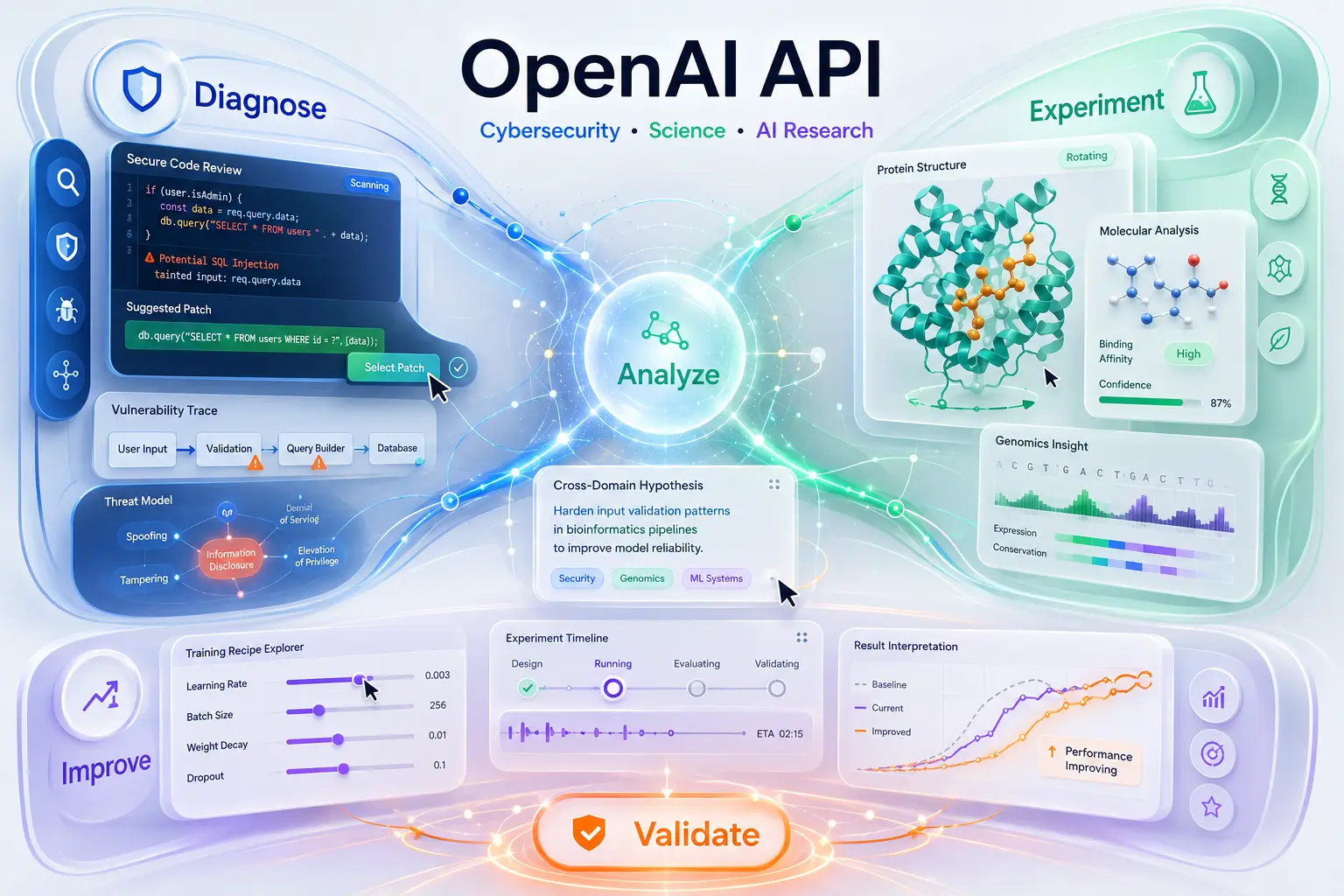
Cybersecurity, Science, and AI Research on the OpenAI API
Across security and research environments, the OpenAI API supports vulnerability analysis, secure code review, patch validation, threat modeling, genomics, life sciences, chemistry, and quantitative biology. GPT-5.6 can also assist AI development by diagnosing research-system failures, optimizing kernels and training recipes, running experiments, interpreting results, and improving technical systems through iterative analysis.
Why Build with GPT-5.6 API on ModelFold
ModelFold brings GPT-5.6 Sol, Terra, and Luna into one developer-focused platform, making it easier to compare model tiers, test realistic requests, manage integration, and control production costs. From initial evaluation to long-term deployment, developers can access practical documentation, flexible model options, responsive support, and additional OpenAI models without maintaining separate integration paths.
Cost-Efficient GPT-5.6 API Pricing
ModelFold helps developers match model spending to the actual difficulty of each request. Complex workloads can use GPT-5.6 Sol API, balanced production tasks can move to Terra, and frequent lightweight requests can run through Luna, allowing products to maintain strong output quality without applying flagship-level costs to every interaction.
Complete OpenAI GPT-5.6 API Documentation
Clear documentation covers authentication, request construction, supported models, reasoning controls, response handling, tool options, and common integration requirements. Developers can review the latest ModelFold API documentation before implementation and keep request logic aligned with currently supported parameters and platform updates.
Test ChatGPT-5.6 API in the ModelFold Playground
Before building the full application, the ModelFold playground provides a practical environment for testing prompts and comparing Sol, Terra, and Luna. Teams can examine response quality, formatting, reasoning behavior, latency, and token use with realistic inputs, reducing unnecessary development changes later.
One Platform for GPT-5.6 Sol, Terra, and Luna
Access to the complete GPT-5.6 family makes model comparison and task-based routing more straightforward. Developers can assign demanding work to Sol, recurring everyday requests to Terra, and high-volume processing to Luna while managing the broader integration from the same platform.
Flexible Access to More OpenAI API Models
Products do not always need to move every request to the newest model generation at once. ModelFold supports additional OpenAI models alongside GPT-5.6, giving developers more flexibility for controlled migration, fallback handling, comparative testing, and applications that use different models for different task categories.
24/7 Support for GPT-5.6 API Integration
Technical questions can arise during authentication, testing, deployment, or production monitoring. ModelFold provides continuous support to help developers resolve integration issues, review unexpected API behavior, and keep GPT-5.6-powered applications operating reliably.
FAQs About ChatGPT-5.6 API
When Was the GPT-5.6 Release Date?⌄
GPT-5.6 release date was July 9, 2026. OpenAI released the complete family for general availability after its limited preview, with Sol positioned as the flagship tier, Terra as the balanced option, and Luna as the fastest and most affordable member.
Which GPT-5.6 API Models Does ModelFold Provide?⌄
ModelFold provides access to GPT-5.6 Sol API, GPT-5.6 Terra API, and GPT-5.6 Luna API. Developers can test all three family members and select different tiers based on reasoning requirements, latency expectations, request volume, and budget. Check the latest ModelFold API documentation for current model identifiers, supported parameters, limits, and platform pricing.
Which GPT-5.6 Model Should Developers Choose?⌄
GPT-5.6 Sol API is designed for the most demanding reasoning, coding, computer-use, cybersecurity, scientific, and professional assignments. GPT-5.6 Terra API offers a balanced combination of capability and operating efficiency for regular production workloads, while GPT-5.6 Luna API prioritizes speed and affordability for frequent or high-volume requests.
How Is OpenAI GPT-5.6 API Different from GPT-5.5?⌄
OpenAI GPT-5.6 API improves performance across agentic coding, terminal work, browsing, computer use, cybersecurity, scientific reasoning, and professional artifact creation. It also introduces a three-tier family structure, stronger design judgment, Programmatic Tool Calling, multi-agent execution, and more predictable prompt caching.
What Is Programmatic Tool Calling in the OpenAI API?⌄
Programmatic Tool Calling allows GPT-5.6 to write and run lightweight in-memory programs that coordinate tools and process intermediate results. It can filter large tool outputs, preserve relevant information, monitor progress, and determine the next action with fewer model round trips and less developer-managed orchestration.
Can ChatGPT-5.6 API Create Presentations, Documents, and Spreadsheets?⌄
ChatGPT-5.6 API can support editable presentations, documents, and spreadsheets with stronger visual hierarchy, typography, formatting, equations, financial logic, and template adherence. It can also infer recurring conventions from reference files, including layouts, spacing, colors, content patterns, and presentation master structures.
Does GPT-5.6 API Support Computer Use and Interface Refinement?⌄
GPT-5.6 API can inspect rendered results rather than evaluating only the underlying code or written content. This allows it to identify visual hierarchy problems, inconsistent spacing, broken interactions, confusing navigation, and unfinished interface details before refining the final output.
How Much Does OpenAI GPT-5.6 API Cost?⌄
Pricing is shown in the pricing card above.
How Can Developers Access GPT-5.6 API on ModelFold?⌄
Create a ModelFold account, generate an API key, and test GPT-5.6 Sol, Terra, and Luna with representative prompts before integration. After choosing the appropriate tier, connect it to the application backend and evaluate response quality, latency, token consumption, and total cost before production deployment.
| Input | 350 credits 1M tokens≈ $1.75 |
| Output | 2100 credits 1M tokens≈ $10.50 |
Billed per token: input and output are priced separately, and thinking tokens count as output. The Playground charges exactly the same way.
Read API docs →curl https://ai.modelfold.online/v1/chat/completions \
-H "Authorization: Bearer $MODELFOLD_API_KEY" \
-H "Content-Type: application/json" \
-d '{"model":"gpt-5-6-sol","messages":[{"role":"user","content":"Hello"}]}'